

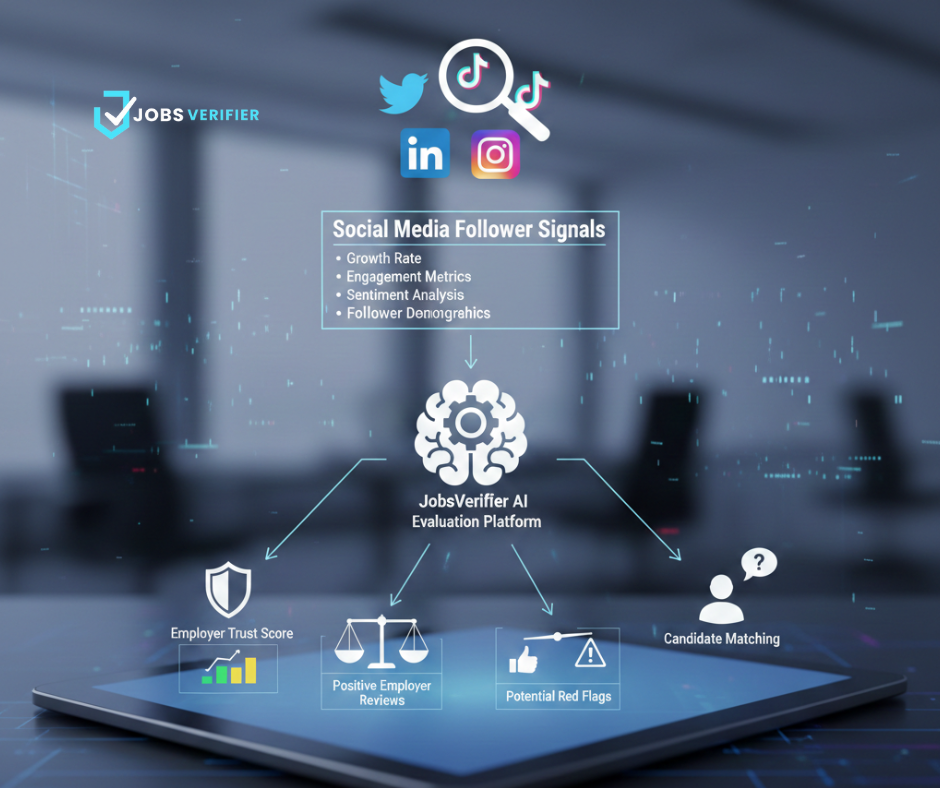
How JobsVerifier uses social media follower signals to evaluate employers
In today’s digital hiring landscape, an employer’s online presence says more about their credibility than ever before. While traditional verification methods — such as business registration, HR email authentication, and company documentation — remain essential, social media signals are quickly becoming a powerful tool in determining whether an employer is legitimate, active, and safe for job seekers.
That’s why JobsVerifier integrates social media follower insights into its employer evaluation process. These signals help identify fake companies, inactive businesses, and suspicious recruiters long before they can trick job seekers with misleading listings.
In this blog, we explore how social media signals shape employer verification, why they matter, and how JobsVerifier uses them to protect candidates from scams and fraud.
Why Social Media Signals Matter in Employer Verification
In 2025, nearly every legitimate business — whether small or large — maintains at least one active online presence. Social platforms are no longer just marketing tools; they’re digital proof of reputation, transparency, and activity.
Here’s why social media follower data is important:
1. Digital identity reflects real-world activity
Genuine companies engage with customers, share updates, post achievements, and interact with their audience.
2. Fake companies often lack a traceable online presence
Scammers rarely maintain long-term, consistent social activity.
3. Follower patterns reveal authenticity
Unusual spikes, low engagement, or suspicious follower accounts often point toward untrustworthy employers.
4. Consistency boosts credibility
A company active for years online is much more likely to be legitimate than one created weeks ago.
Social media is not the only verification method — but it is a powerful early-warning system that strengthens candidate safety.
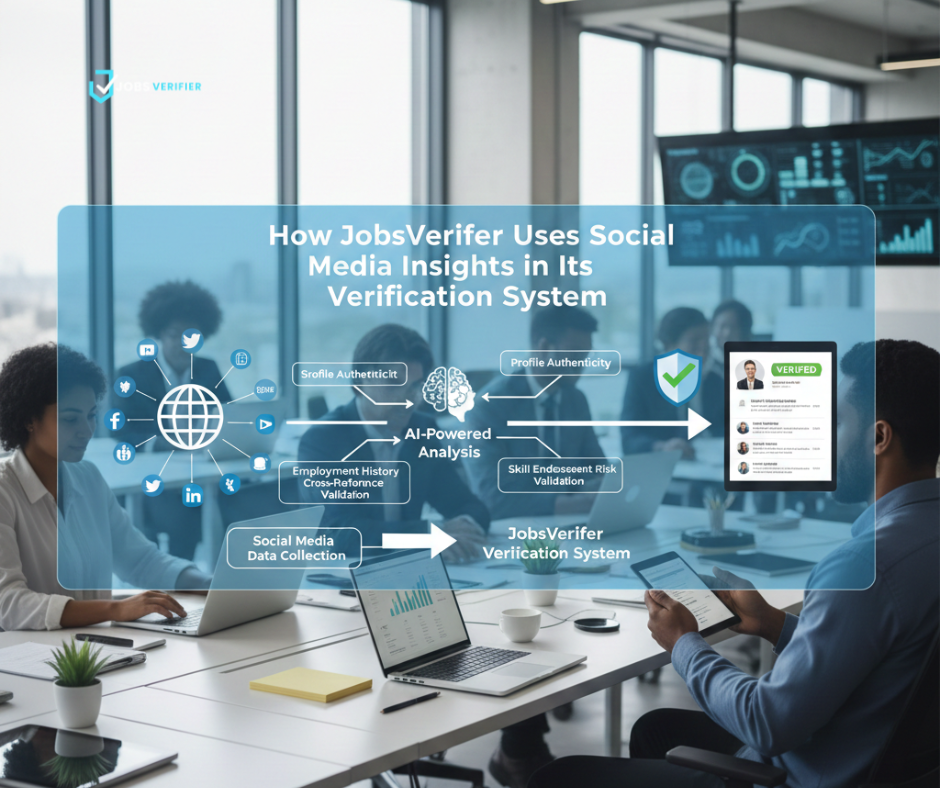
How JobsVerifier Uses Social Media Insights in Its Verification System
JobsVerifier analyzes social media follower signals using a combination of AI-driven tools, pattern analysis, and manual reviewer expertise. Here’s how the process works:
1. Profile Discovery & Verification
The first step is identifying a company’s official social media profiles, such as:
- X (Twitter)
- TikTok
JobsVerifier checks for:
- Official profile links
- Business name consistency
- Verified page badges
- Matching website URLs
- Authentic HR or admin accounts
A mismatch between the job post and social media identity is an immediate red flag.
2. Follower Count Evaluation (Not Just the Number)
Follower count alone doesn’t determine authenticity — but it provides context.
JobsVerifier looks for patterns such as:
✔ Natural follower growth
Gradual increase = Real audience
Sudden jumps = Potential fake followers
✔ Audience relevance
Followers from relevant industries and regions show genuine interest.
✔ Age of the account
Older accounts tend to be more authentic.
✔ Matching follower base with company size
A “large corporation” with only 40 followers on LinkedIn raises concerns.
JobsVerifier never penalizes small businesses — but it flags inconsistencies that suggest suspicious activity.
3. Engagement Quality Check
Follower counts can be purchased — but engagement cannot be faked sustainably.
JobsVerifier examines:
✔ Likes, comments, and shares
Do they look real?
Are they consistent?
✔ Comment authenticity
Are comments from genuine profiles, or are they generic bot-style messages?
✔ Recency of interaction
Are people engaging with recent posts?
✔ Audience demographics
Is the audience relevant to the company’s industry and location?
Low, fake, or bot-like engagement often signals a misleading business identity.
4. Activity Timeline Analysis
A verified employer should have:
- Regular posts
- Updated information
- Recent news, events, or achievements
- Announcements about hiring or operations
JobsVerifier checks:
✔ Posting frequency
An active business posts at least once every few weeks.
✔ Account age
Companies with social pages created last month may require deeper verification.
✔ Updated business details
Addresses, phone numbers, and website links should match the job post.
A completely inactive account doesn’t automatically disqualify an employer, but it triggers further investigation.
5. Red Flag Signals Detected Through Social Media
The system detects several suspicious indicators automatically:
❌ Fake followers
Accounts with no profile pictures, zero posts, or identical names.
❌ Stock images as profile photos
Common in scam pages pretending to be real companies.
❌ Inconsistent identity
Different names or mismatched information across platforms.
❌ No engagement at all
A “big hiring company” with zero interactions is suspicious.
❌ Newly created pages
Often used by scammers planning short-term fraud.
These signals don’t outright reject a company, but they lead to additional proof checks before a job is approved.
Why This Matters for Job Seekers
Most job seekers never check employer social media profiles — leaving them vulnerable to:
- Fake HR accounts
- Scams through WhatsApp
- Ghost companies
- Fraudulent job postings
- Pay-to-apply schemes
JobsVerifier uses social media signals so candidates don’t have to.
This results in:
✔ Safer job applications
No more applying to companies that don’t exist.
✔ Higher-quality job postings
Social verification eliminates low-trust recruiters.
✔ Transparent employer identity
Candidates can research companies easily and confidently.
✔ Protection from ghost listings
Inactive or abandoned companies are filtered out.
✔ Peace of mind
Every job comes from a business with a confirmable digital presence.
In a world full of digital deception, social signals act as a layer of protection for job seekers.
Social Media Isn’t the Only Signal — But It’s a Powerful One
JobsVerifier uses social media signals alongside other verification methods:
- Business documents
- Company website analysis
- Domain and SSL verification
- HR identity matching
- AI fraud detection
- Manual reviewer approval
Social media enriches the verification process — it does not replace traditional methods.
But in many cases, it catches inconsistencies early, stopping scams before they reach the platform.
The Future: Smarter Verification Through Digital Footprints
As scams become more advanced, verification must evolve. Social media will play an even greater role in future screening because:
- Digital identity is becoming part of business legitimacy
- Companies showcase culture and activities online
- Fraudulent companies can’t maintain real engagement over time
- Candidates rely more on online research before applying
JobsVerifier is building a hiring ecosystem where every employer has a trusted, transparent digital footprint.
Final Thoughts: Social Signals Build Trust
Social media follower signals offer an important window into a company’s authenticity. They reveal real activity, audience trust, and long-term credibility — making them a powerful tool for evaluating employers.
By incorporating follower signals into its verification process, JobsVerifier ensures that job seekers only interact with real, trustworthy, and active employers.
Because in modern hiring, your safety starts with their transparency.